

DOGO ONSEN
Explore the culture of Dogo Onsen and Matsuyama City
Wellness & Rejuvenation in Dogo
3,000 Years of Onsen Culture and Literary Heritage
Facing the Seto Inland Sea, Matsuyama and Dogo Onsen stand out for their deep historical and cultural lineage.
Since Japan’s mythic age, this has been a place where people have come to restore both body and spirit—a true origin of Japanese wellness culture.
Staying at an onsen inn, walking the stone paths with a bamboo basket, and taking in the timeless scenery long celebrated in haiku for centuries all reflect the quiet charm of Dogo.
Renowned authors, emperors, and cultural figures have cherished this place, shaping a remarkable story that continues today.
 所蔵:松山市
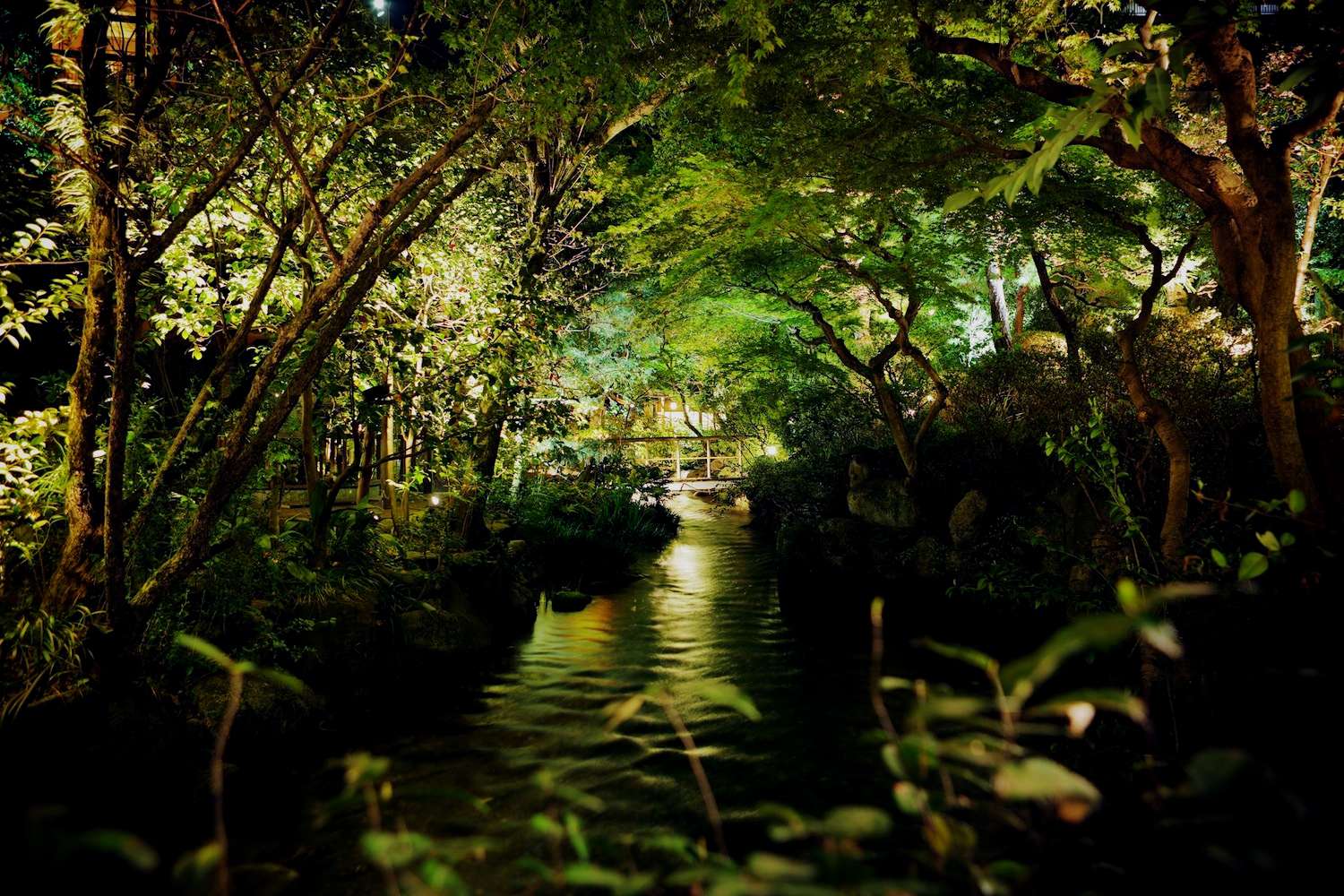
Its landscapes and traditions still invite travelers to slow down, reflect, and reconnect with themselves—soaking in ancient waters and encountering words passed down through poets and authors from the past.
Dogo Onsen and Matsuyama are restorative cultural destinations.
Let yourself be embraced by 3,000 years of stories and gentle renewal.
History
A Story of Hot Springs and Japanese Culture from Japan’s Mythic Age
Dogo Onsen is said to be Japan’s oldest hot spring, appearing in both the Kojiki (712) and the Nihon Shoki (720).
In Japan’s mythic narratives, Ōkuninushi heals the ailing Sukunahikona in these waters, and historical accounts describe Prince Shōtoku bathing here during the Asuka period in the 6th century. It has long been known as a place of deep restorative power.
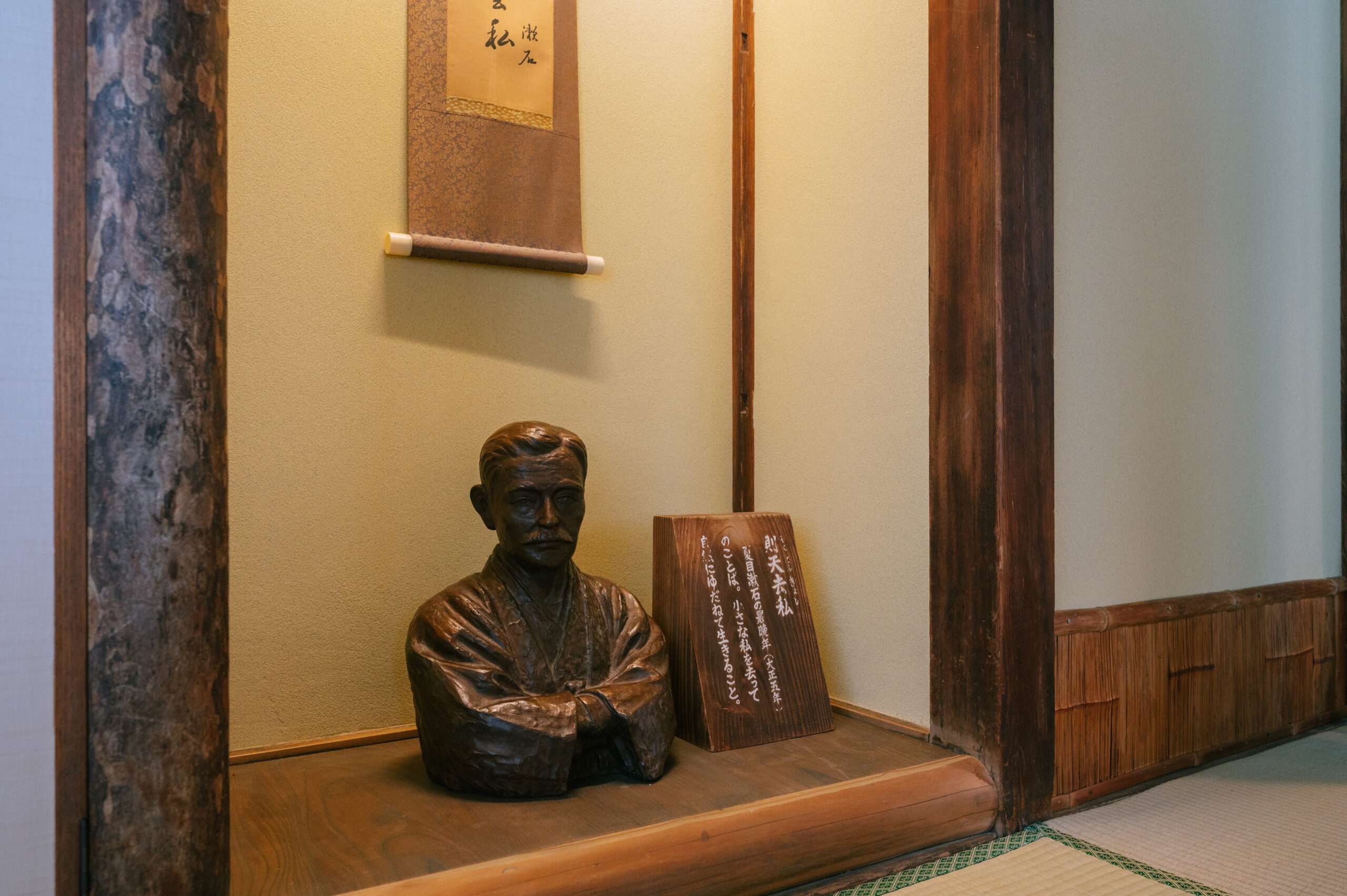
In later centuries, Dogo became beloved by major literary figures of the Meiji era (1868–1912), including Natsume Sōseki, Masaoka Shiki, and Takahama Kyoshi.
Sōseki set his celebrated novel Botchan here, and the area’s scenery has inspired countless haiku, giving Dogo a distinctive atmosphere shaped by literature and the arts.
The long story of Dogo Onsen continues into the present day.
Said to be Japan’s oldest hot spring, these ancient waters have been a source of healing since time immemorial, supporting people through times of change, offering a quiet place to reflect, recover, and reconnect with oneself.
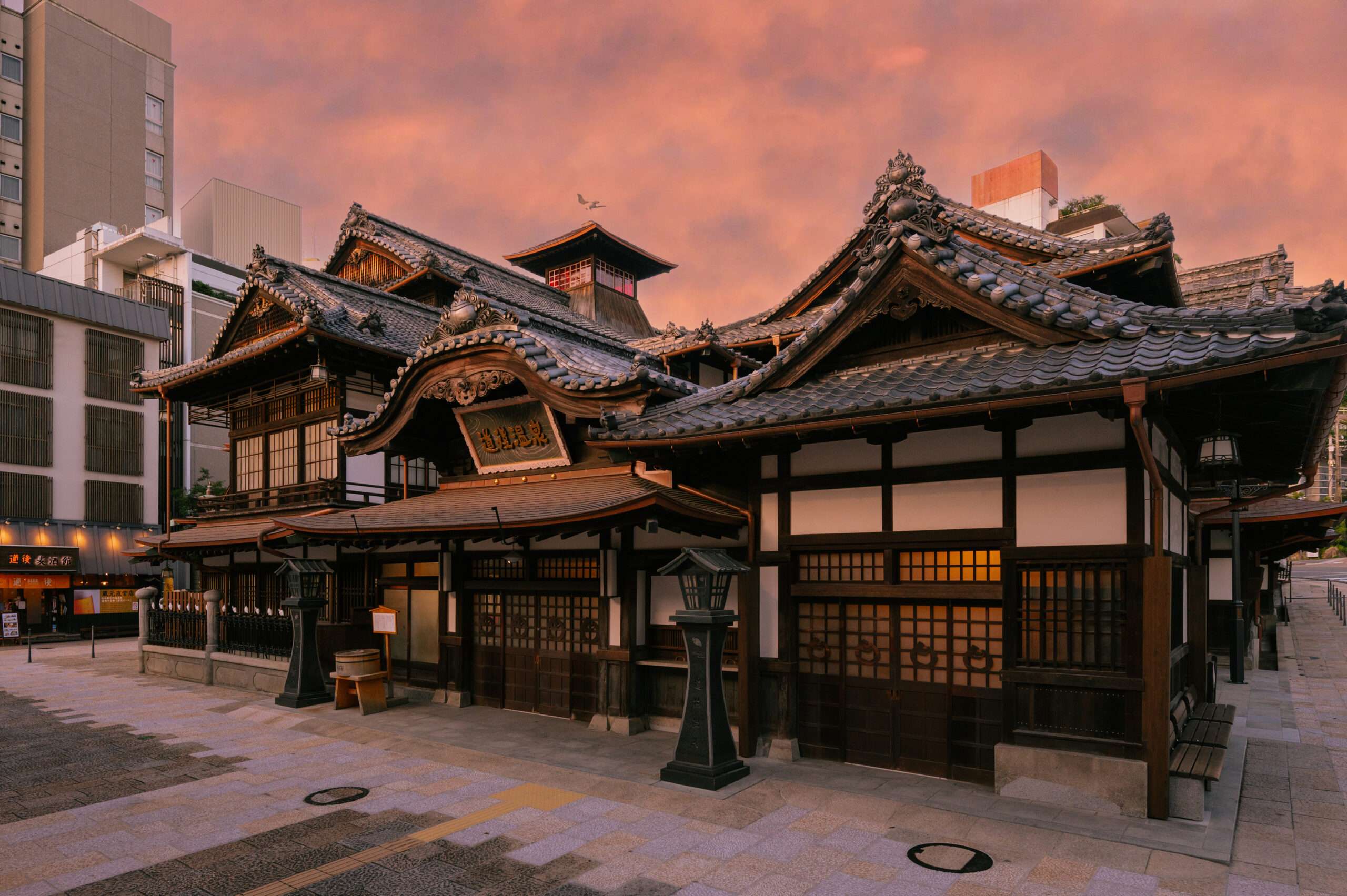
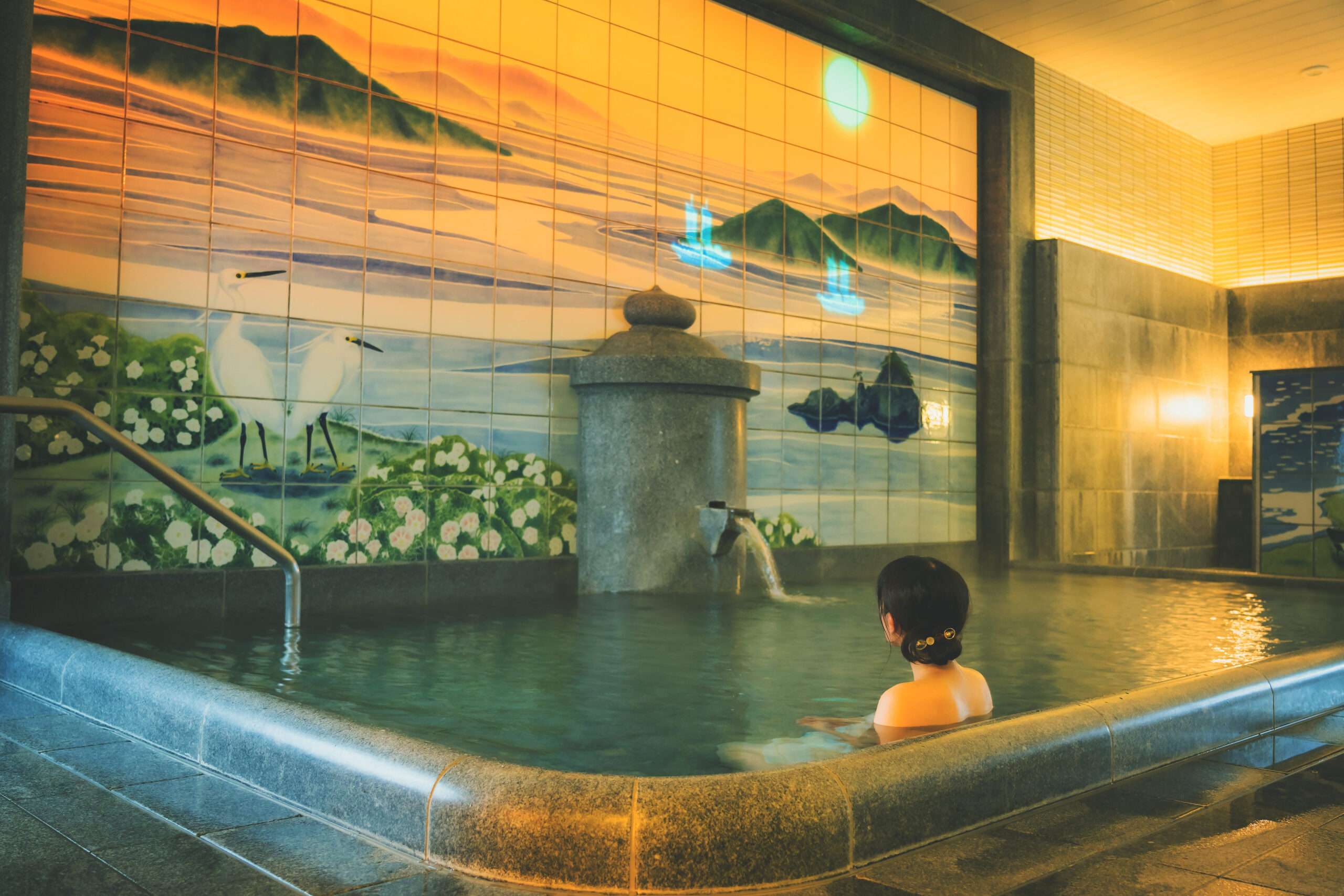
Today, visitors can enjoy a panoramic walkway overlooking the town, three public bathhouses—Dogo Onsen Honkan, Tsubaki-no-Yu, and Asuka-no-Yu—each with its own history and design, and a lively hot‑spring district that links them together.
We invite you to experience this timeless hot‑spring tradition and enjoy a moment of deep, unhurried renewal.
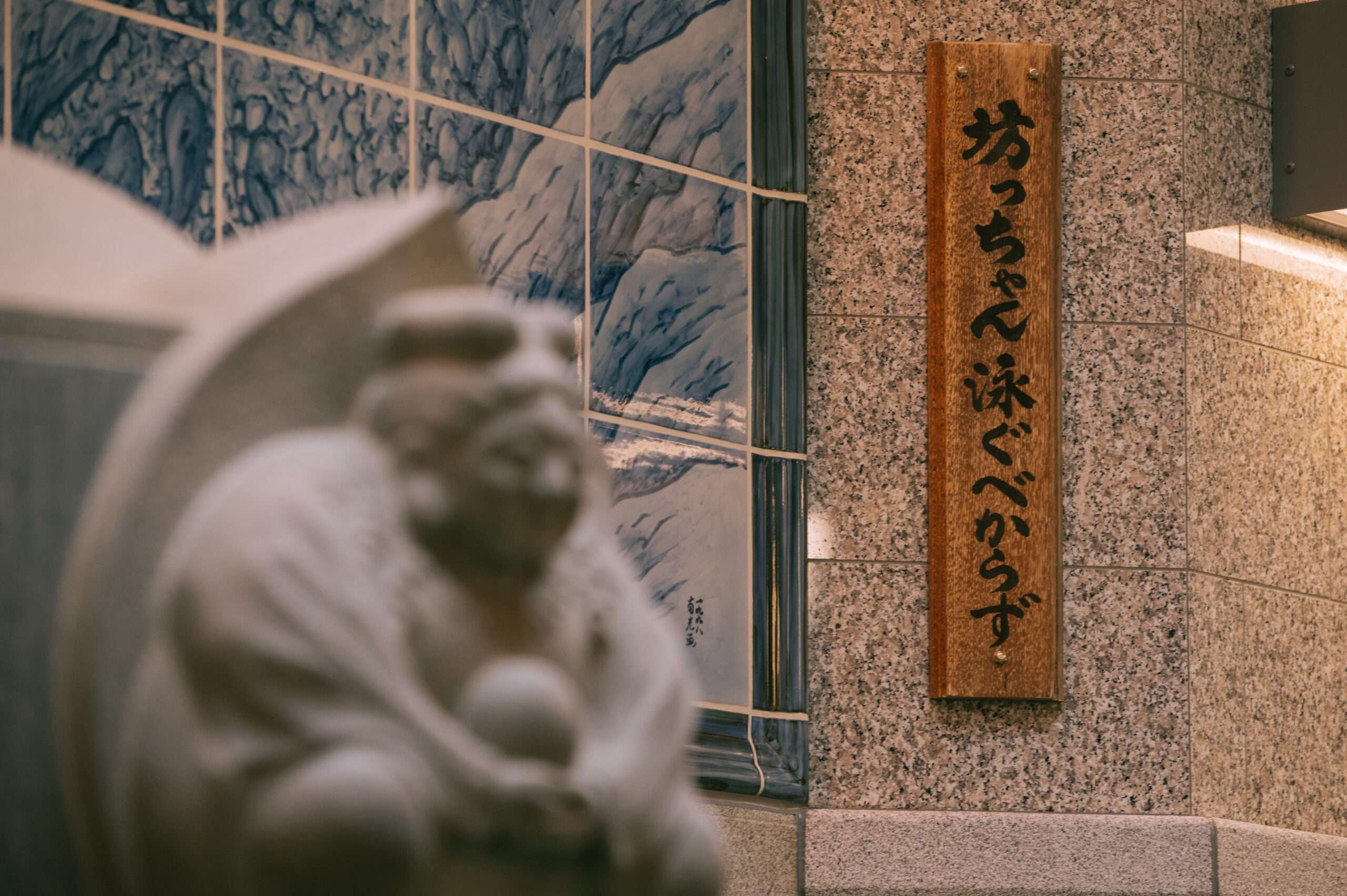 所蔵:松山市
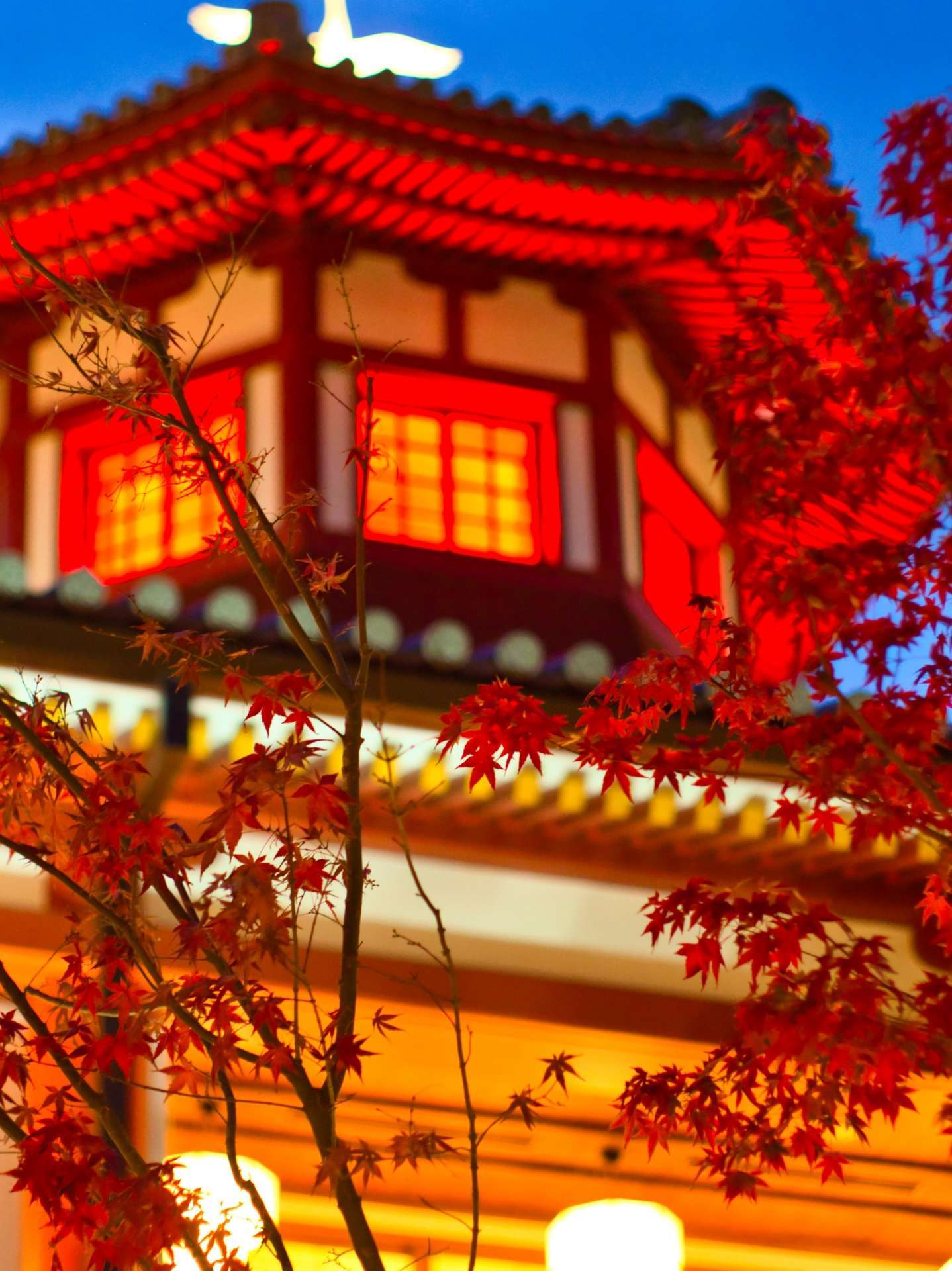
The Cultural Gems of Dogo Onsen and Matsuyama
In 596 during the Asuka period, Prince Shōtoku visited Dogo Onsen and praised its **breathtakingly beautiful nature** and the **high‑quality hot‑spring waters**. It is said that he erected a stone monument on the hill above the baths to honor the spring. Even today, camellias—the official flower of Matsuyama—grow in abundance, and the sight of these sacred waters offering their blessings equally to all was once compared to an ideal realm of harmony and well‑being.
Dogo Onsen continued to appear throughout Japan’s classical literature: in the *Manyoshu* during the Nara period (710–794) and in *The Tale of Genji* during the Heian period (794–1185).
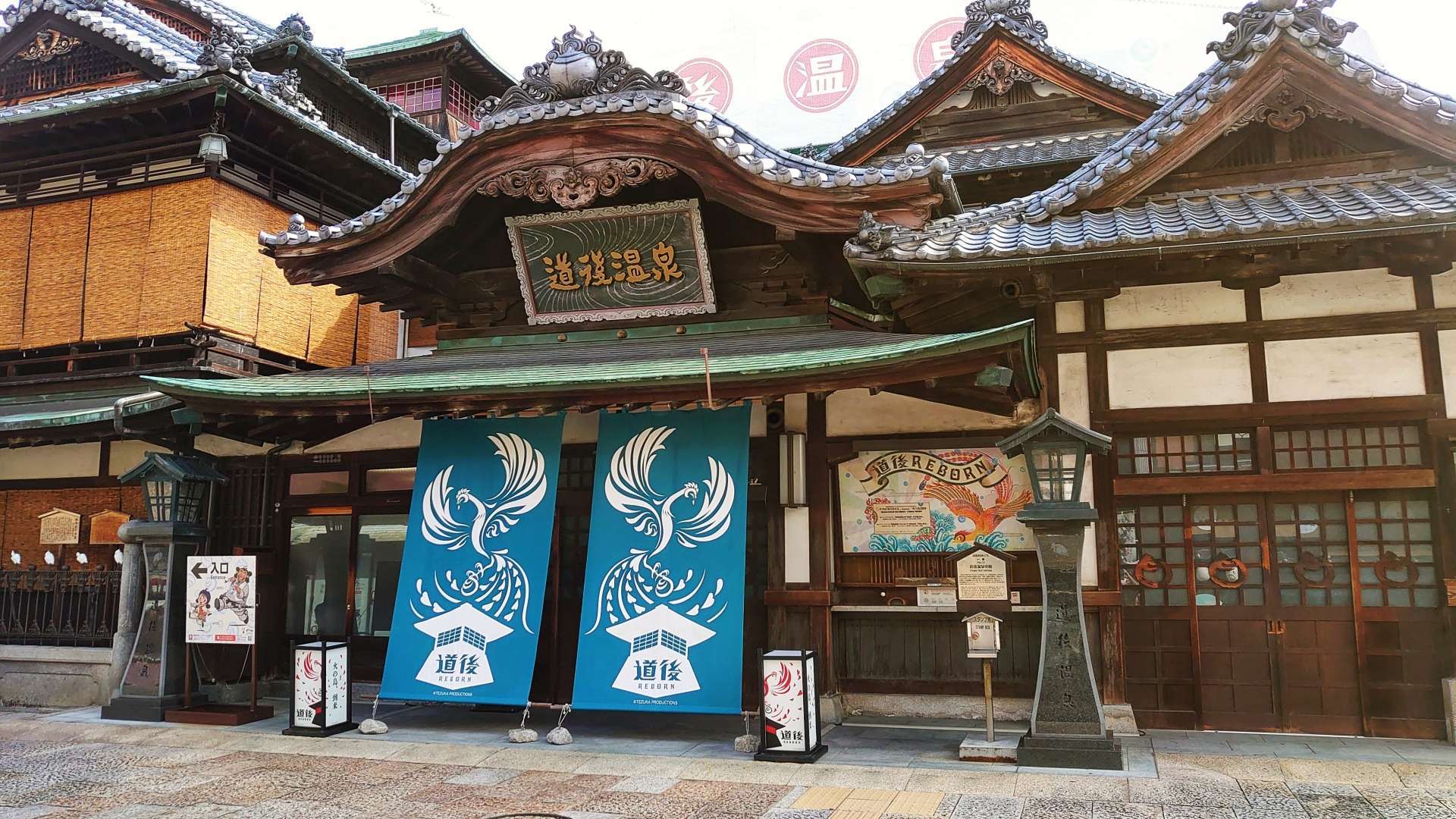
Centuries later, in 1894, the town’s first mayor, Isaniwa Yukiya, undertook the ambitious reconstruction of Dogo Onsen Honkan with the vision of preserving it as a cultural treasure for the next hundred years. His efforts resulted in the magnificent three‑story wooden bathhouse that still stands today. This achievement was later recognized when the Honkan became the first public bathhouse in Japan to be designated an Important Cultural Property in 1994.
Dogo also has a long connection with the Imperial Family. From the late 19th to early 20th century, a private bathing room was built within the Honkan exclusively for imperial guests—the only one of its kind in Japan. This historic architectural space, known as Yushinden, is **open to public viewing today**.
The evocative scenery of Dogo Onsen has long been cherished by cultural figures, with the stories of Natsume Sōseki and Masaoka Shiki—two **literary giants of the late 19th century**—shining especially brightly.
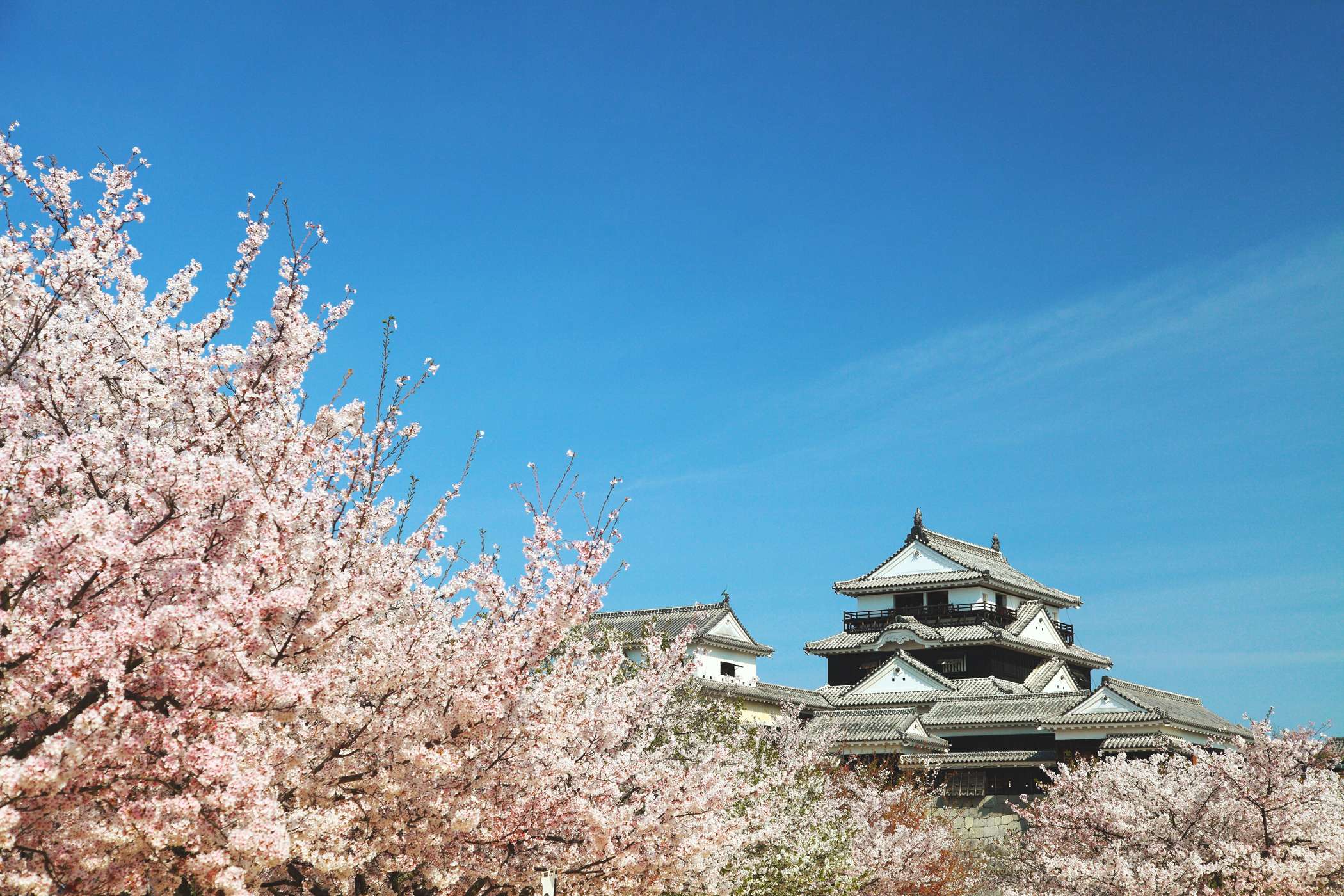
At the same time, Matsuyama as a whole is rich in cultural heritage: Matsuyama Castle, one of the twelve surviving original castles of the early Edo period; Hogon‑ji, founded by the Dogo‑born monk Ippen, **a Buddhist priest** who established the Ji‑shū sect; and Ishite‑ji, deeply connected to **Kūkai, the founder of Shingon Buddhism**, and home to national treasures. With numerous national treasures and Important Cultural Properties preserved across the region, the entire city feels like a living museum.
 所蔵:松山市
From the mythic age, when a white heron was said to have healed its wounds in the waters of Dogo Onsen—
to ancient times, when Prince Shōtoku inscribed his admiration for the spring—
to the medieval era, when the legend of Emon Saburō deepened Dogo’s ties to Kūkai—
to the early Edo period, when peace after the Battle of Sekigahara allowed a prosperous castle town to flourish—
and into the modern era, when Natsume Sōseki and Masaoka Shiki nurtured a profound friendship through the power of words amid the upheaval of the Meiji Restoration.
Matsuyama is a place where the stories of five eras, and the present day, can be felt all around you.
We invite you to experience the depth of this history and enjoy the many layers of culture that continue to shape Dogo Onsen and Matsuyama.
ACCESS
Ehime Prefecture / Matsuyama City
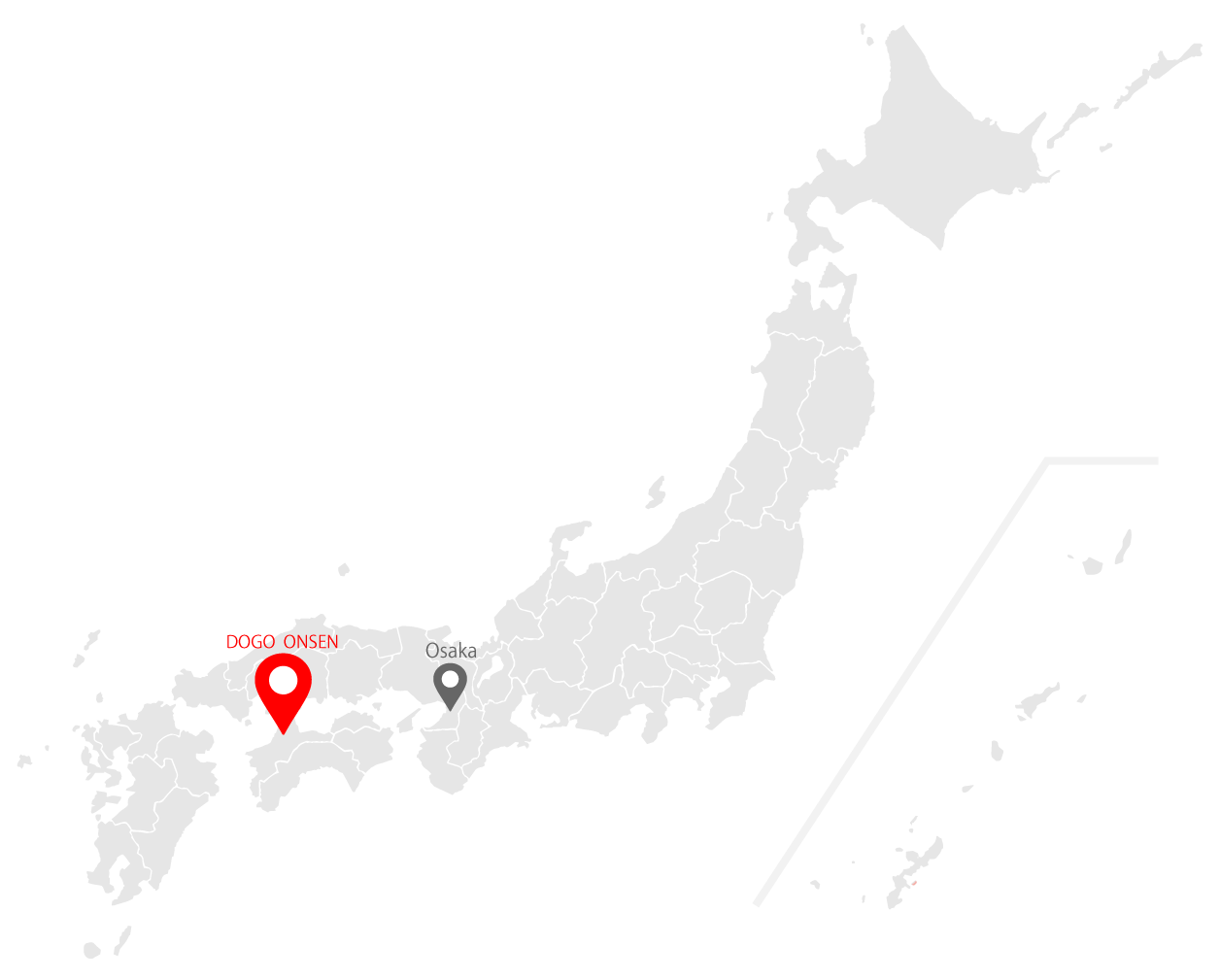
approx. 1–2 hrs total
 Flight
approx. 1–1h 30m
 Bus
Busapprox. 45m
Dogo Onsen Honkan – Yushinden
Japan’s Only Imperial Bathing Pavilion
From the time of Prince Shōtoku (574–622), Dogo Onsen has maintained a deep connection with Japan’s Imperial Family.
Yushinden, the exclusive bathing pavilion built for imperial use, was completed in 1899. Crafted from premium, knot‑free Japanese spruce and decorated with generous gold and silver leaf, the pavilion reflects exceptional craftsmanship and ceremonial elegance. Guided tours are available, offering access to rare cultural features found only here, including Onarimon, the dedicated entrance used exclusively by imperial guests, Gyokuzan‑no‑Ma, the formal sitting room reserved for the Emperor, and the Oyu‑den, where members of the Imperial Family once bathed while clothed in a bathtub carved from Aji granite, a highly valued stone from Kagawa.
 所蔵:松山市
所蔵:松山市
所蔵:松山市
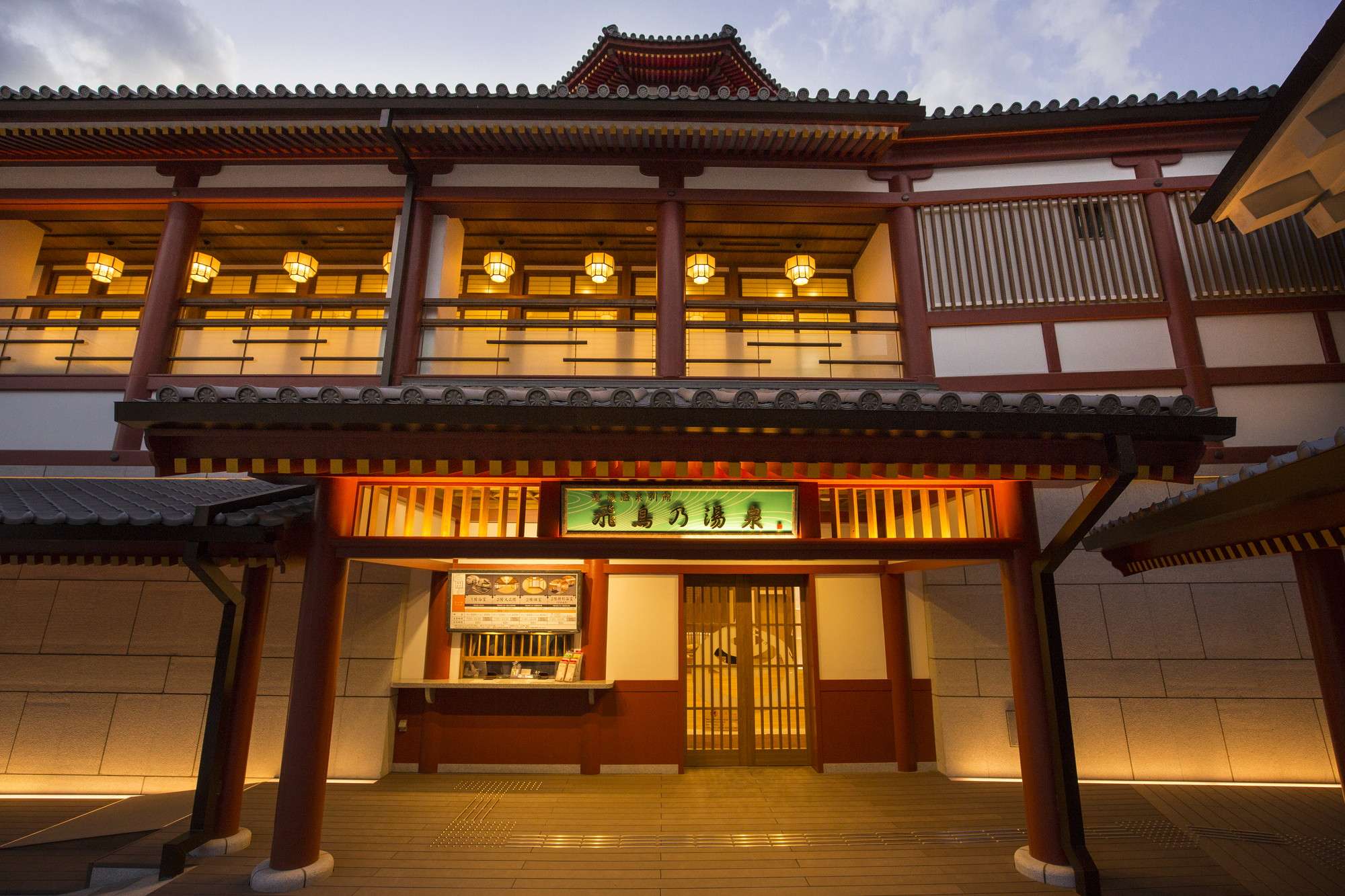
To share this heritage with visitors today, a fully recreated version of Yushinden’s bathing room was built inside Asuka‑no‑Yu, an annex of Dogo Onsen. This private, reservation‑only bath offers a distinctive experience: guests can bathe in a faithfully reconstructed setting, wearing a yuchō—the traditional garment said to have been worn by imperial bathers—while surrounded by architectural details inspired by the original Yushinden.
When you visit Dogo Onsen, we invite you to enjoy this rare opportunity to experience a bathing tradition deeply connected to Japan’s Imperial heritage—an experience found nowhere else.
Dogo Onsen Strolling Guide
Walking into Dogo’s History and Hot‑Spring Charm
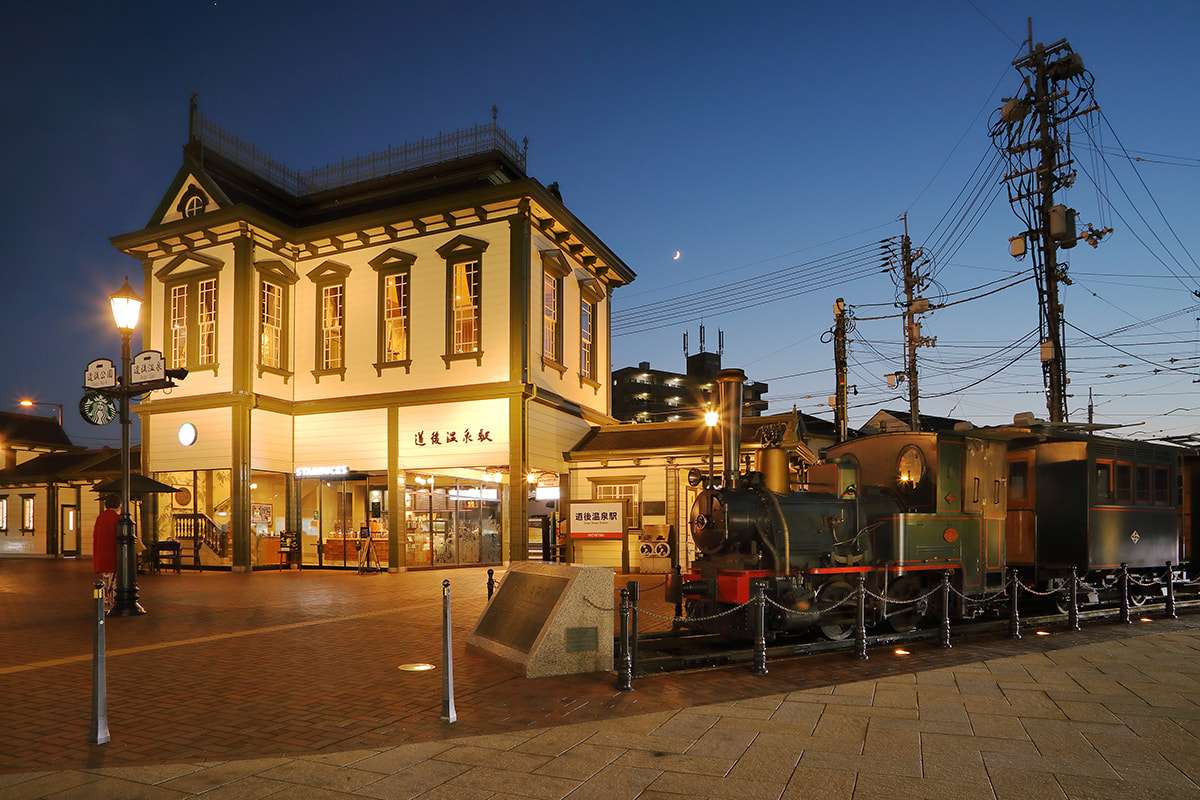
The Dogo Yunomachi area, centered around the Dogo Onsen Honkan, is a compact hot‑spring district where visitors can enjoy strolling through atmospheric streets rich in cultural character. The Honkan, designated as an Important Cultural Property, completed its major preservation and restoration work in 2024. Its renewed appearance reflects the warmth and beauty of the original building, first established in 1894. Nearby, the elevated public parking area features the “Sky Promenade,” where visitors can enjoy a footbath while taking in panoramic views of Dogo. At night, the illuminated townscape creates a serene and memorable scene.
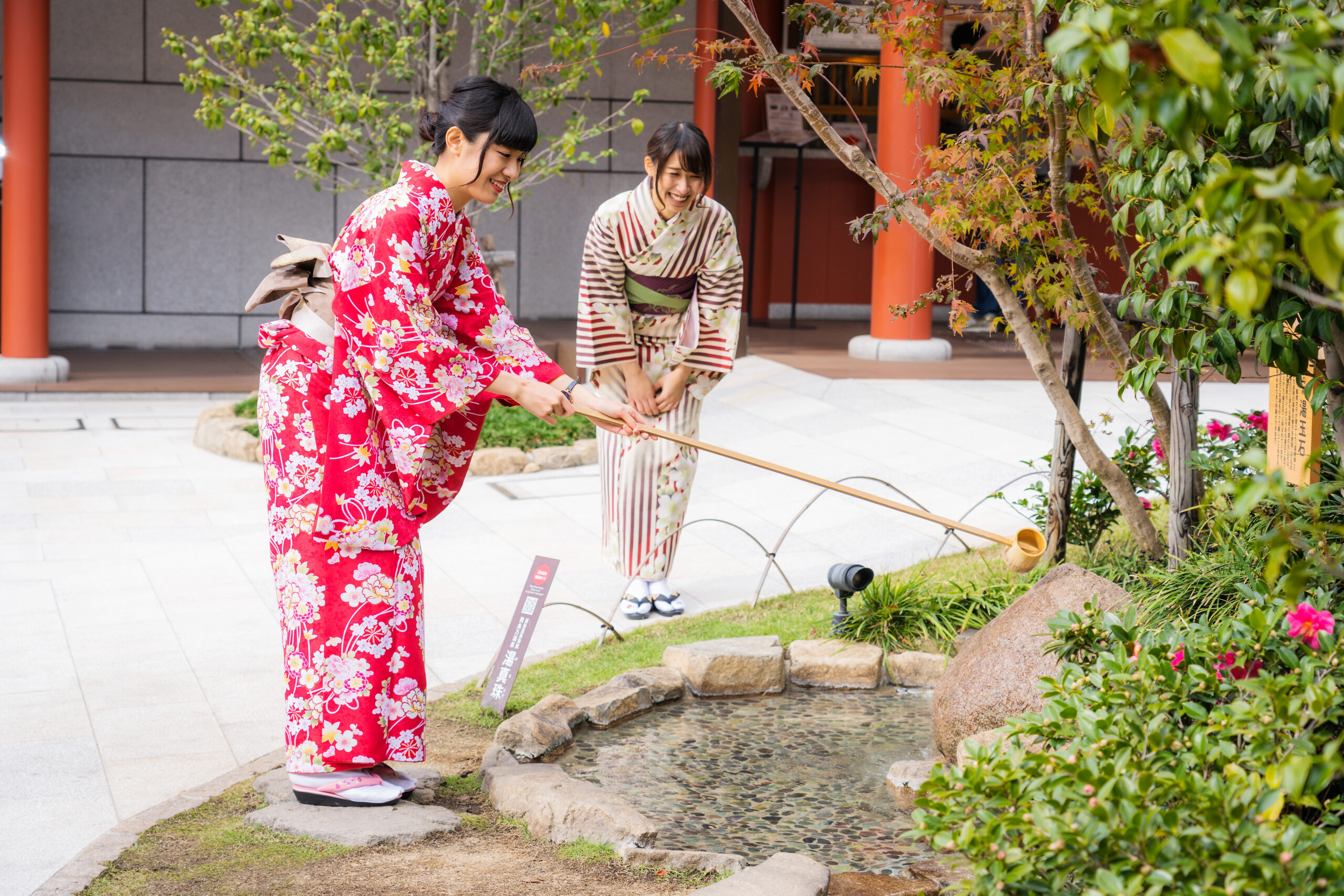
For those interested in the connection between hot springs and Japanese spirituality, Dogo offers several meaningful sites. Isaniwa Shrine, said to have been built to commemorate the visit of Empress Jingū (3rd century) and Emperor Chūai (reigned 192–200), stands at the top of a long stone staircase and is known for its striking vermilion hall. Yuzuki Shrine, which hosts an annual spring ritual in gratitude for the revival of a hot‑spring source once buried by an earthquake, also reflects the deep relationship between Dogo and its waters.
 所蔵:松山市
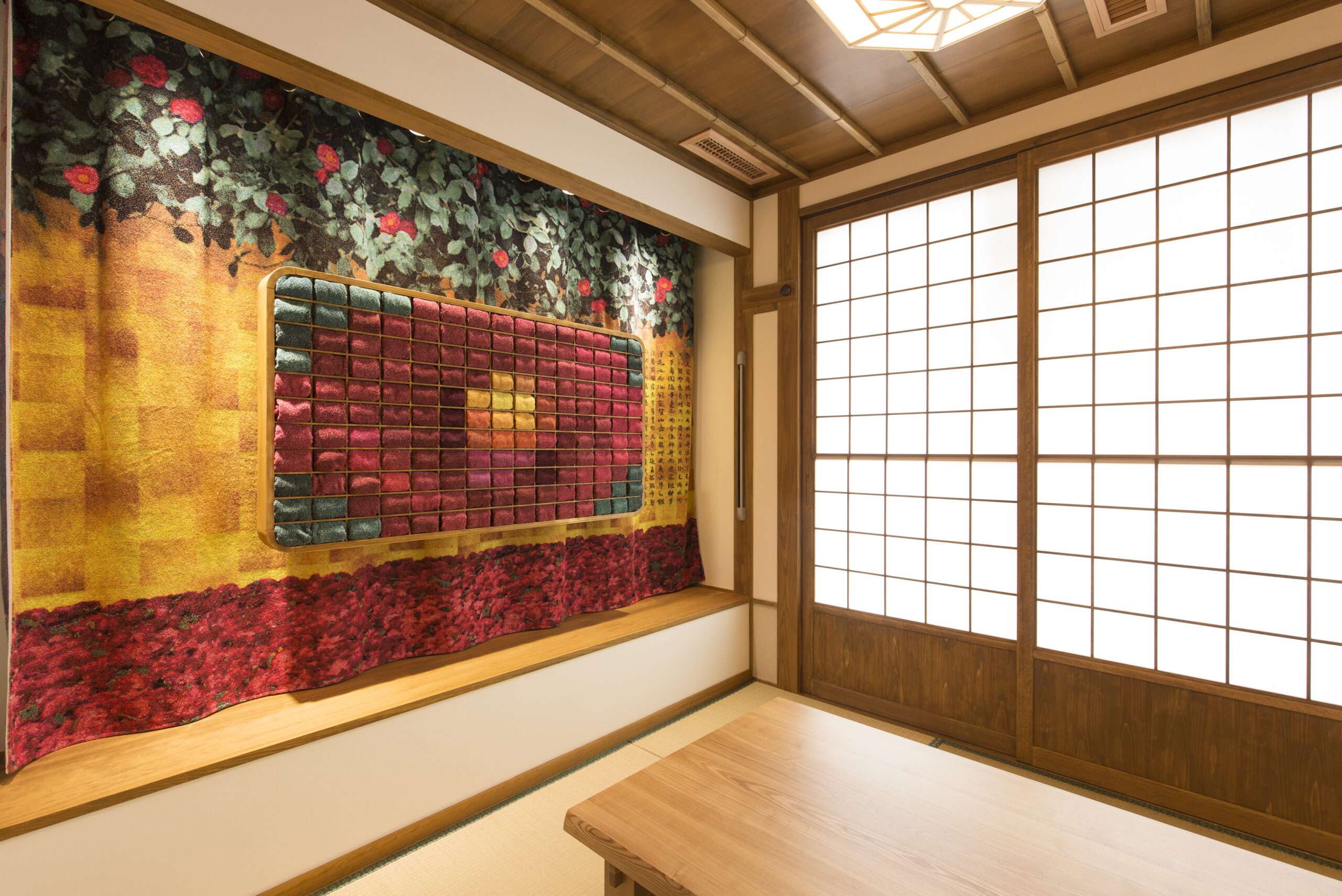
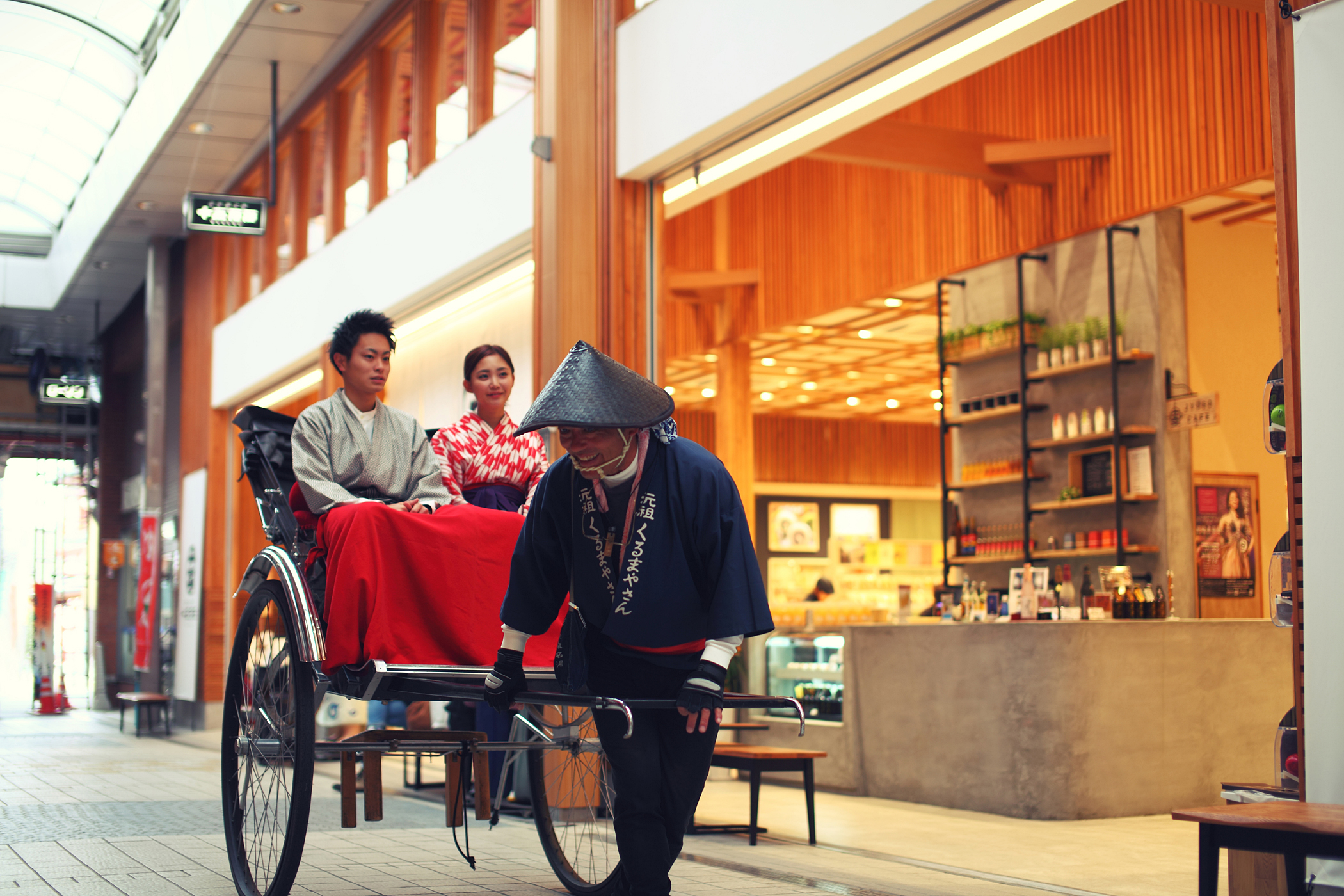
Traditional Japanese hot‑spring towns have long embraced the culture of soto‑yu, or “public bath hopping,” where people walk through town in yukata robes and wooden sandals, carrying a small basket from their inn to the bathhouse and then out into the streets. Dogo Onsen preserves this tradition in a way that visitors today can still enjoy. In addition to the historic Dogo Onsen Honkan, the area features Tsubaki‑no‑Yu, a beloved local bathhouse for more than 70 years, and Asuka‑no‑Yu, opened in 2017, which blends traditional craftsmanship with contemporary art to create a new expression of the hot‑spring experience.
A walk through the hot‑spring district naturally leads to local shops and casual snacks. The Dogo shopping arcade is perfect for a relaxed stroll after a bath, offering everything from sweets to traditional crafts—items and flavors found only here.
To the west of the shopping street lies Nikitatsu‑no‑Michi, a quiet stone‑paved path. It is known as the place where Empress Saimei composed a poem in 661 while waiting for favorable tides before sailing from Dogo to Kyushu. A short walk along this atmospheric path brings you to Mizuguchi Brewery, founded more than 120 years ago. Using high‑quality local spring water, the brewery produces sake as well as craft beer and gin, combining tradition with innovation. Visitors can enjoy tastings and guided tours of the brewery.
Compact yet full of places to explore, Dogo Onsen offers a rich cultural atmosphere best experienced on foot. We invite you to take your time and discover the many layers of history and charm woven throughout this hot‑spring town.
Ishite‑ji Temple: A Glimpse into the Shikoku Pilgrimage
A Mindful Journey Through a Historic Pilgrimage Path
Ishite‑ji Temple, the 51st site of the Shikoku Pilgrimage, is closely connected to Emon Saburō, a 9th‑century figure whose legend of rebirth is said to have inspired the origins of the pilgrimage, as well as to Kūkai, the Buddhist monk who shaped its spiritual foundation. The temple attracts many visitors for its impressive cultural architecture, including the National Treasure Nio Gate, along with Important Cultural Properties such as the Kongōrikishi statues, the Main Hall, the Three‑story Pagoda, the Kariteimo Hall, the Goma Hall, the Bell Tower, and the Gorintō stone monument.
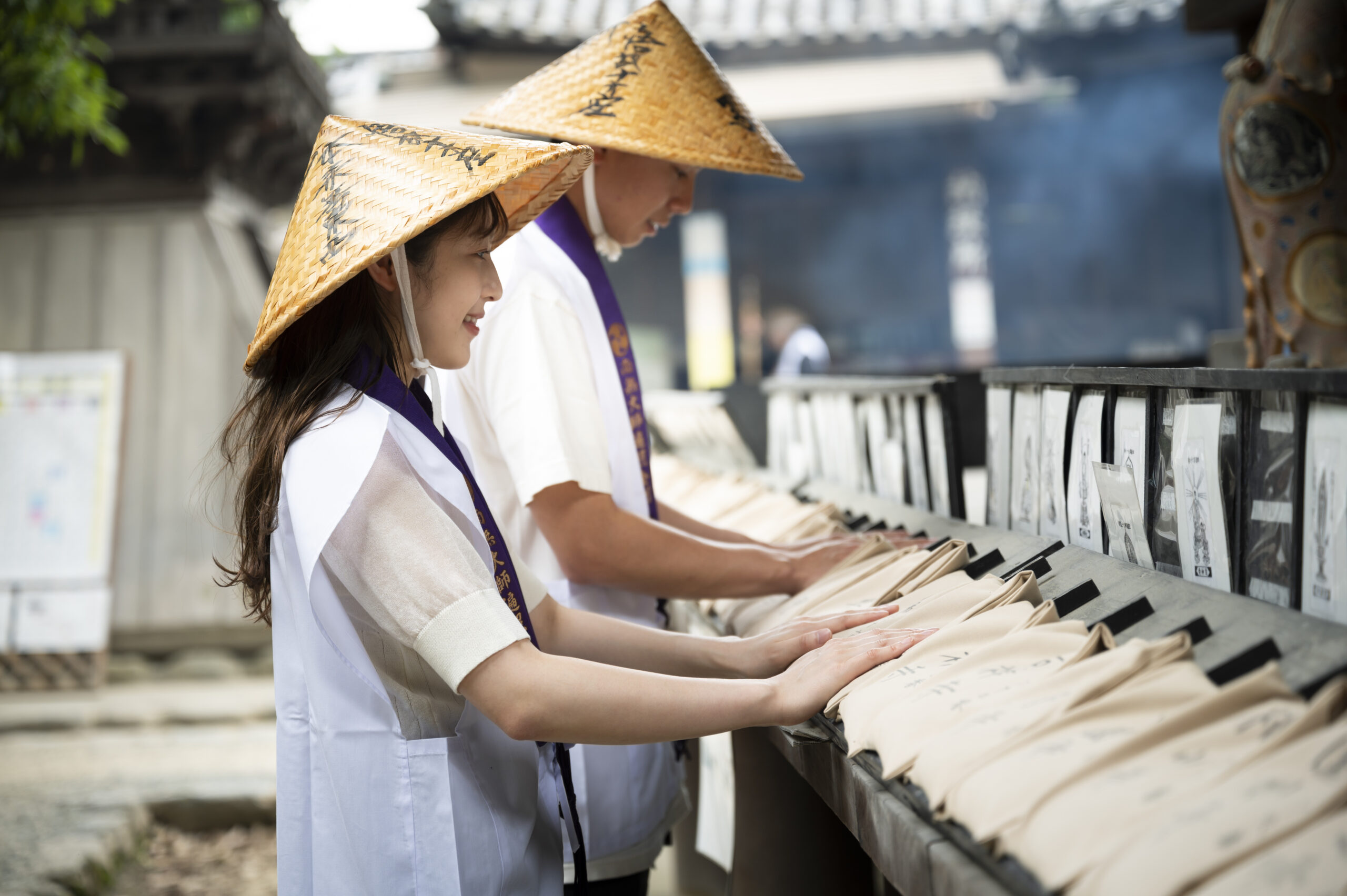
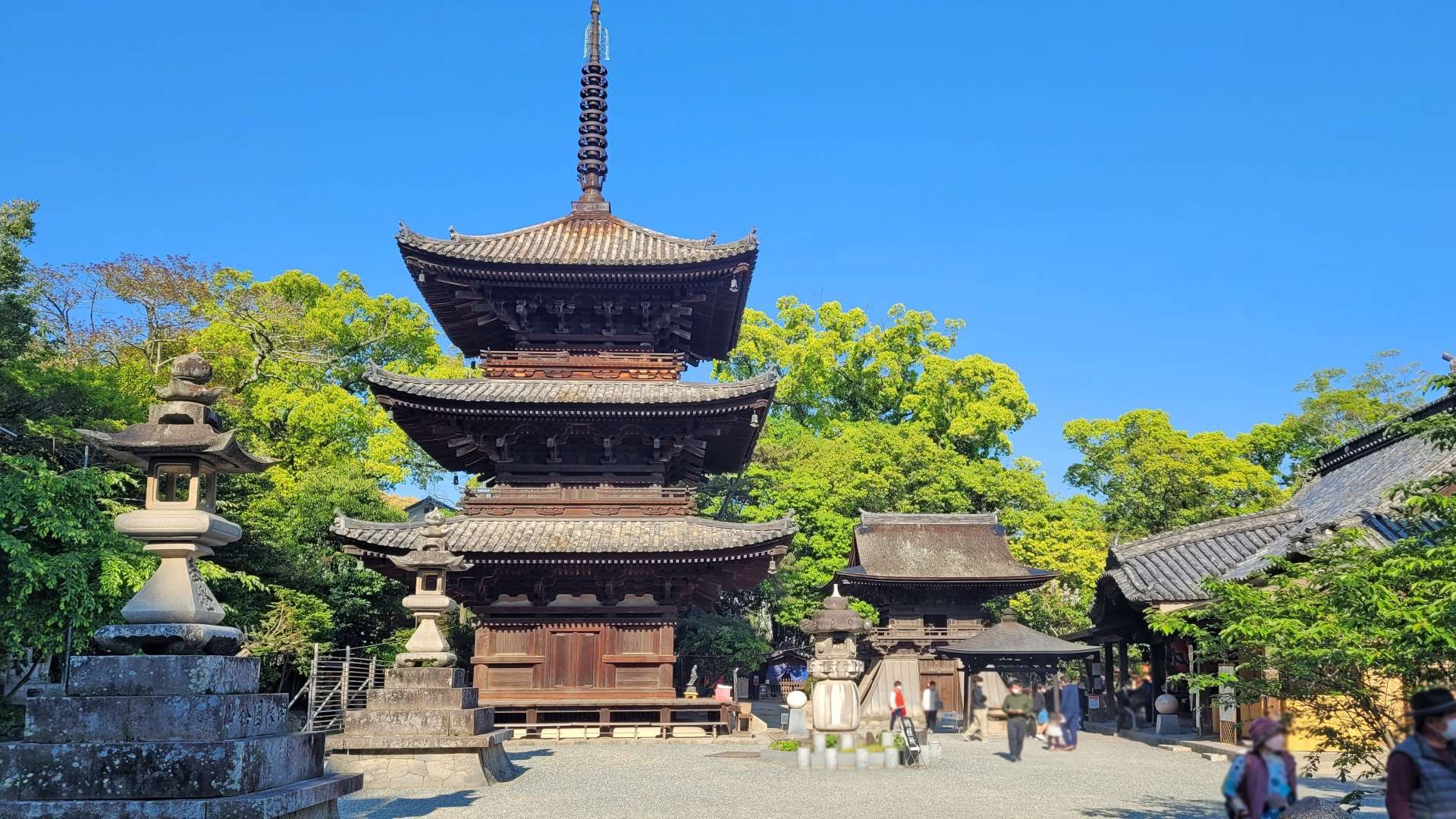
For those interested in Japan’s pilgrimage traditions but unsure about attempting the full Shikoku route, Matsuyama Haiku offers a guided Ishite‑ji Pilgrimage Experience. Participants wear the traditional white pilgrim attire and walk about 20 minutes from the Dogo Onsen area to the temple. Upon arrival, visitors purify their hands at the temizuya before entering the grounds, where National Treasures and Important Cultural Properties stand side by side. The experience continues into the Mantra Cave, said to be a place where Kūkai once practiced. In today’s terms, it feels like a quiet space for mindfulness—a setting that encourages reflection, clarity, and a sense of gratitude.
For those who wish to deepen their cultural experience beyond Dogo Onsen, a visit to Ishite‑ji Temple offers a meaningful step into the world of the Shikoku Pilgrimage.
ONSEN EXPERIENCES
TOURISM GUIDE
Pick Up
 所蔵:松山市
A Three‑Day Journey into the Cultural Depths of Dogo Onsen and Matsuyama
Experience the depth of Dogo Onsen and Matsuyama through a three‑day itinerary that blends history, culture, and quiet moments of renewal.